Cover, Flanking, and Line-of-Sight: A 2026 Primer
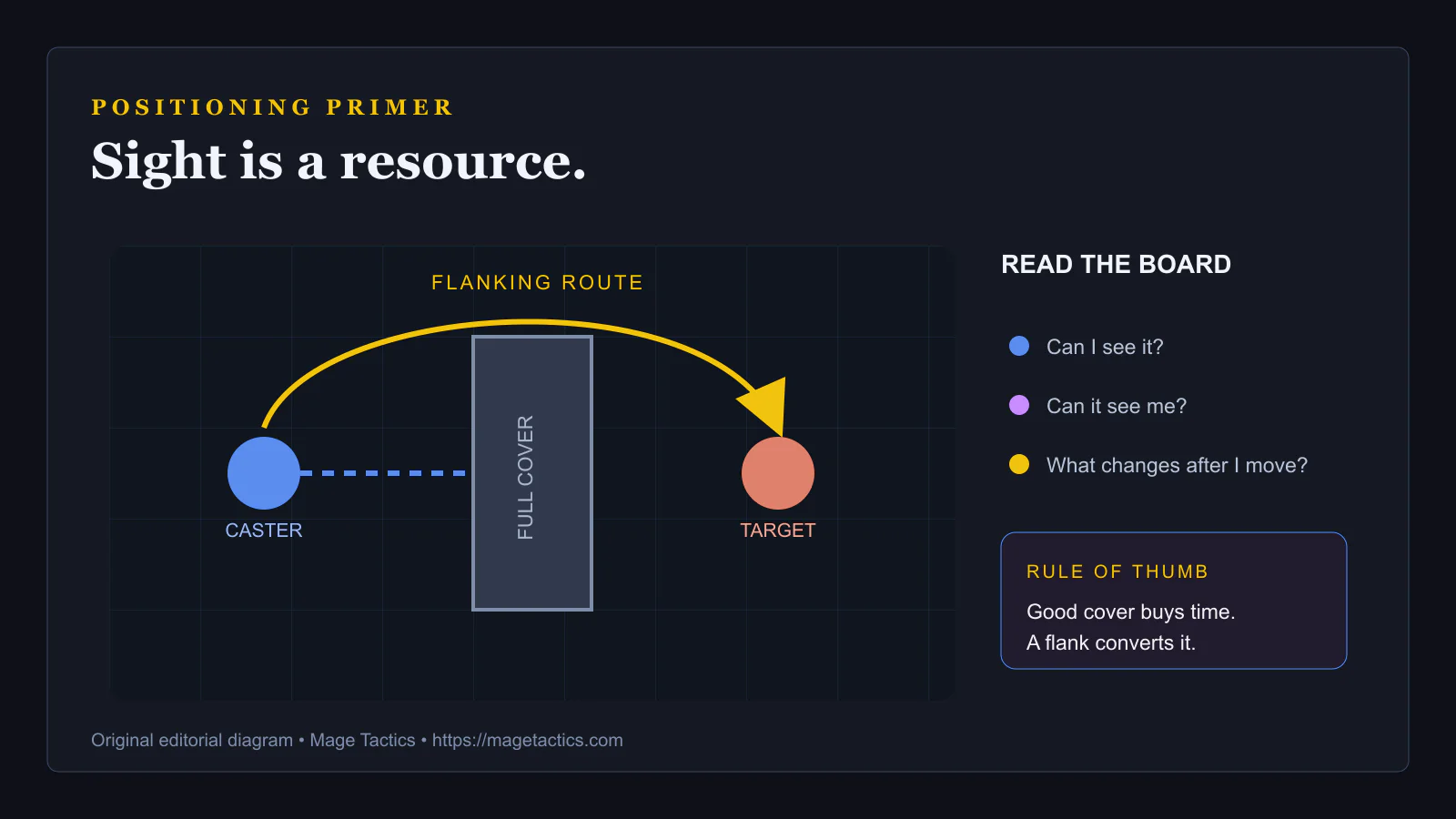
Image: Mage Tactics
Most new tactics players think they lost a fight because they rolled badly. More often they lost it three turns earlier by standing in the wrong place. Cover, flanking, and line-of-sight are the invisible rules that decide whether your 75 percent shot was ever really a 75 percent shot, and whether the enemy’s flanker was ever going to miss. Learn to read them as one connected system and you stop blaming the dice.
Cover Is a Bonus, Not a Wall
The first mistake is treating cover as safety. In most grid tactics, cover is a defensive modifier against attackers who shoot along the covered edge. A high or full cover tile might grant a large defense bonus; half cover grants a smaller one. But that bonus only applies against fire coming from the direction the cover faces. A unit crouched behind a wall facing north is completely exposed to anything shooting from the east or south.
This is why veterans talk about cover in terms of angles rather than tiles. The question is never “am I in cover” but “am I in cover against the units that can actually see me.” A tile that protects you from one enemy while leaving you open to two others is worse than an exposed tile that only one enemy can reach.
Flanking Is Cover Denial
Flanking is simply attacking a unit from an angle its cover does not protect. When you flank, the target’s cover bonus is ignored, and many systems add a critical-hit bonus on top. That combination is the single biggest swing in most tactics fights: a flanked target can go from a 40 percent shot to a near-guaranteed critical.
The strategic consequence is that positioning is a two-sided negotiation. Every move you make either preserves your cover angles or opens a flank. And every enemy position is an invitation to move around it. Good play often looks less like advancing on the enemy and more like circling to a tile where their wall stops mattering.
- To flank effectively: spend movement getting to the unprotected side, even if it means a longer path than a direct approach.
- To avoid being flanked: favor corners and interior tiles where fewer approach angles exist, and watch for enemy units with the movement range to loop around you next turn.
- To bait a flank: occasionally a slightly exposed unit lures the enemy out of their own cover, opening them to your overwatch.
Line-of-Sight Ties It Together
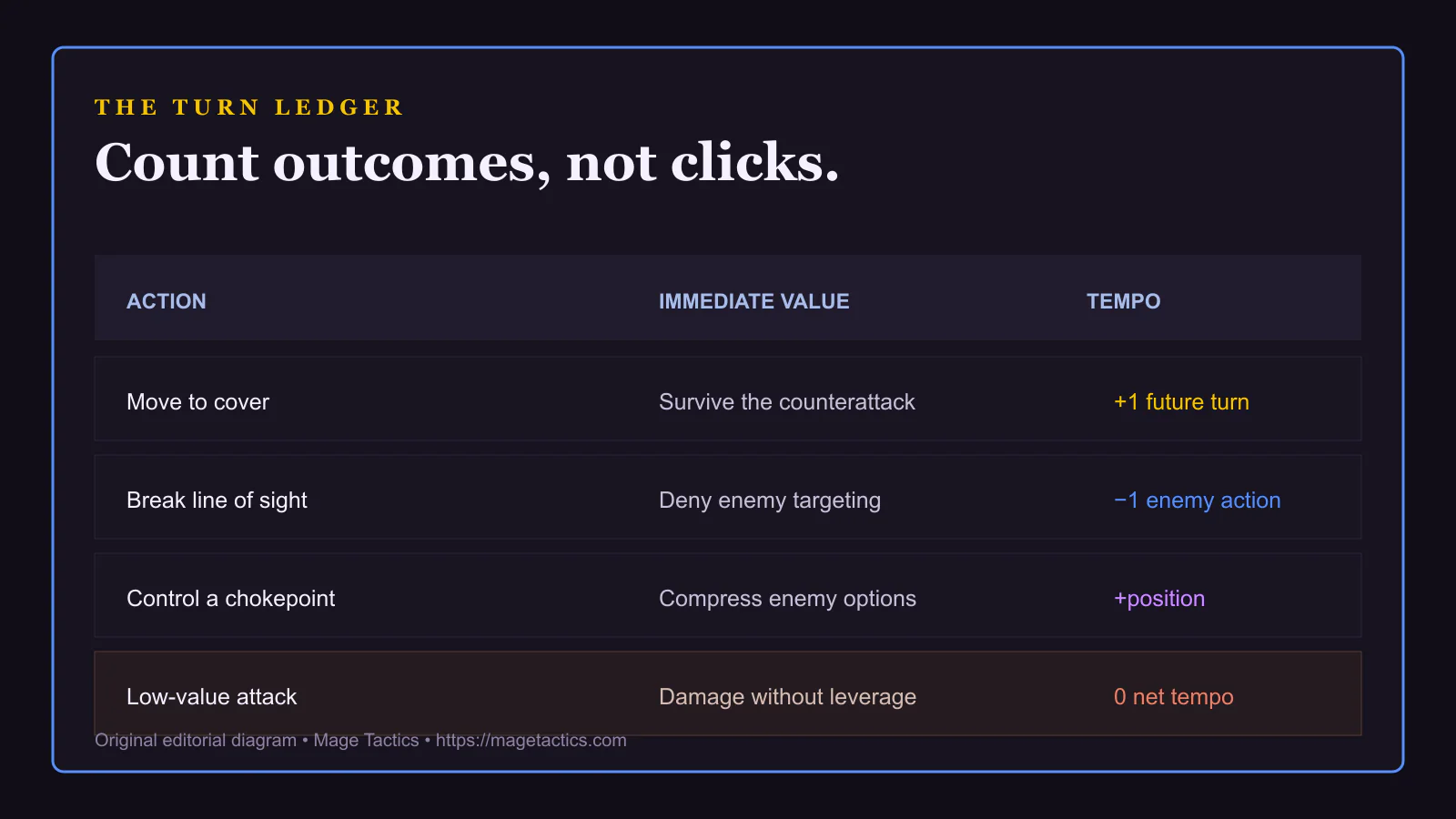
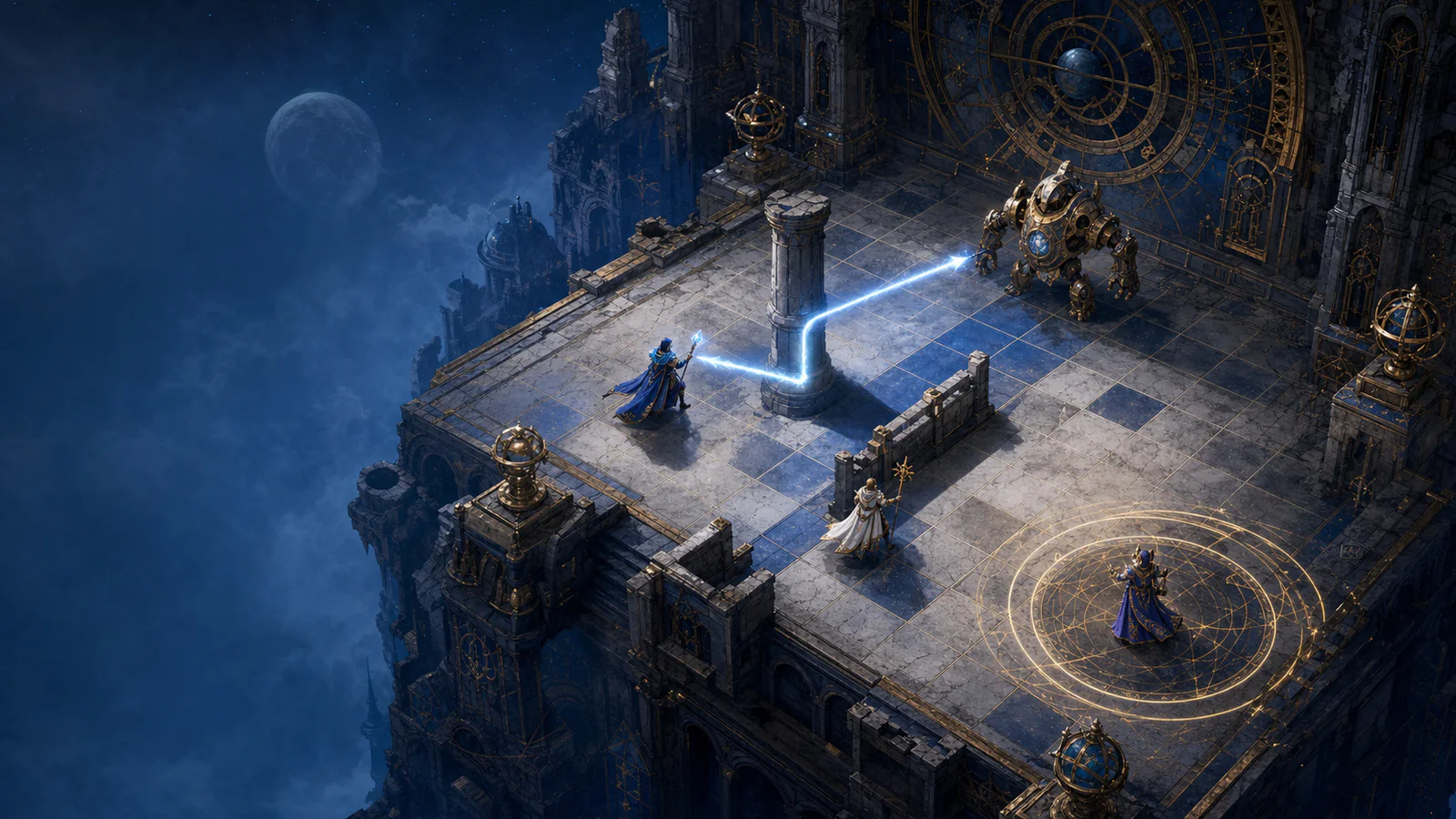
Cover and flanking only matter for units that can see each other, and line-of-sight is the rule that decides that. If a wall, a piece of terrain, or elevation blocks the straight line between two units, no shot happens regardless of range. This makes sightlines a resource you can spend and deny.
Breaking line-of-sight is a legitimate defensive action. Ducking a wounded unit fully behind a building removes it from the fight for a turn as surely as a heal would. Conversely, high ground usually extends your line-of-sight over obstacles, which is why elevation is prized in nearly every grid tactics game: it lets you see and shoot units who cannot see or shoot you back.
Here is how the three pillars interact at a glance:
| Situation | Cover | Flank | Line-of-sight |
|---|---|---|---|
| Behind a wall facing the shooter | Full bonus | No | Yes |
| Behind a wall, shot from the side | Ignored | Yes | Yes |
| Fully behind a building | N/A | No | Blocked, no shot |
| On high ground over low cover | Bonus reduced for target | Often yes | Extended |
Turning Terrain Into a Plan
Once these rules click, a tactics map stops being decoration and becomes a set of options. Chokepoints let one unit hold a lane because only one enemy angle exists. Open ground is a trap because it offers no cover against anyone. Destructible cover, a fixture in many 2026 XCOM-likes and the grid tactics highlighted around TurnBasedThursday Fest 2026, means the walls you rely on can vanish, so never bet a unit’s life on cover an enemy grenade can erase. Read the terrain first, then decide where your units want to be, and the shots tend to take care of themselves.
FAQ
Does full cover make a unit safe? No. It reduces the chance of being hit along the covered angle. A flank ignores it entirely, and a unit in full cover can still be killed by high-percentage or flanking fire.
Is high ground always worth taking? Usually, because it extends line-of-sight and often improves aim while weakening the target’s cover. The exception is when reaching it exposes you to more enemies than it protects you from.
How do I stop getting flanked every fight? Think one turn ahead about enemy movement range. If an enemy can reach your unprotected side next turn, you are not really in cover this turn.
Key Takeaway
Cover, flanking, and line-of-sight are a single positioning system, not three separate rules. Judge every tile by which enemies can see it and from what angle, use movement to flank enemy cover while protecting your own, and remember that breaking line-of-sight can save a unit as reliably as any defensive ability.
turn-based tacticscover systemflankingline of sightpositioning