Why One Extra Action Can Break a Tactics Game
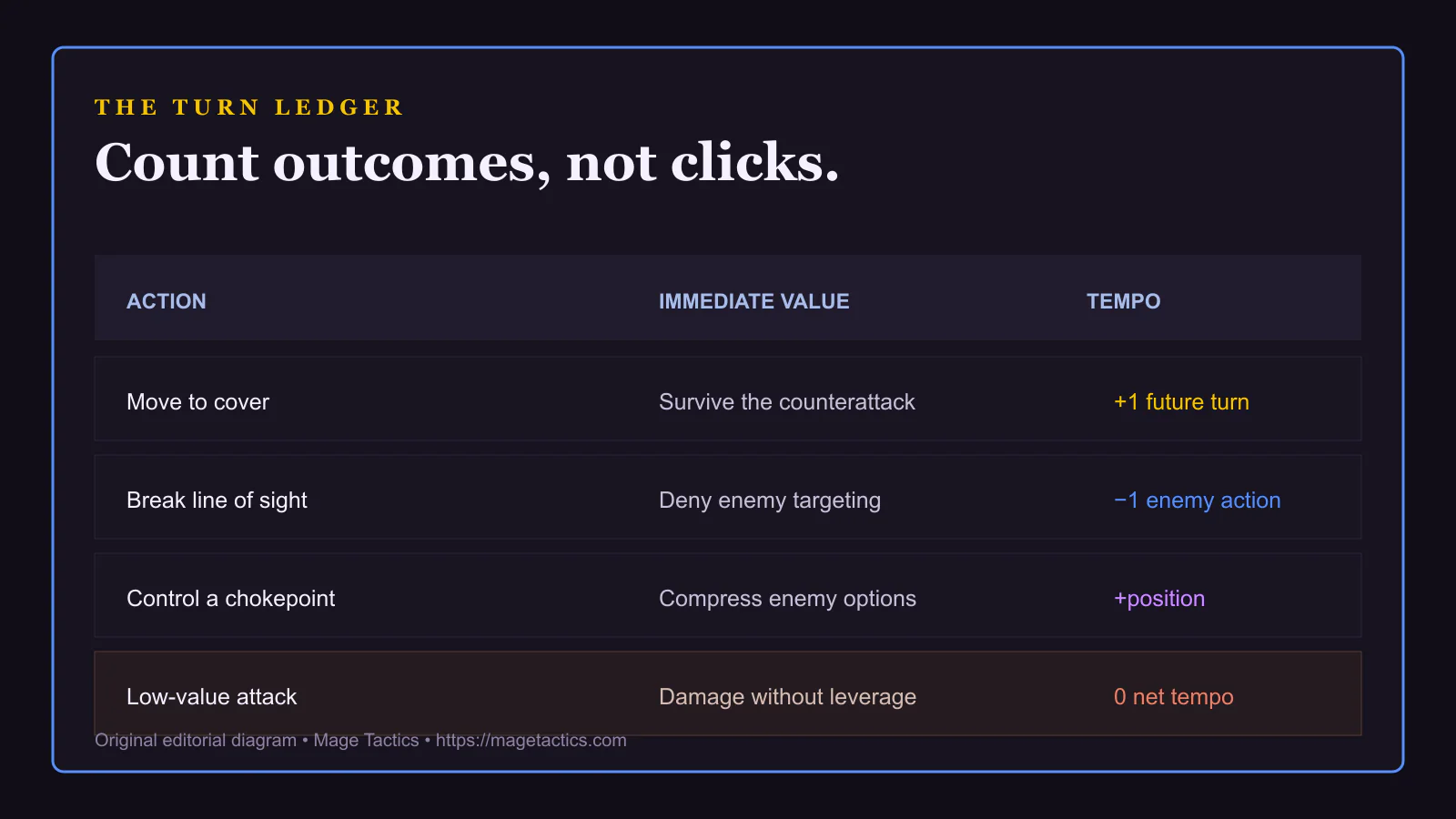
Image: Mage Tactics
Players see “gain one action” and compare it with a damage upgrade. Designers know the comparison is usually wrong. Damage changes one outcome; an unrestricted action changes the number of decisions a unit can convert into outcomes.
The hidden multiplication
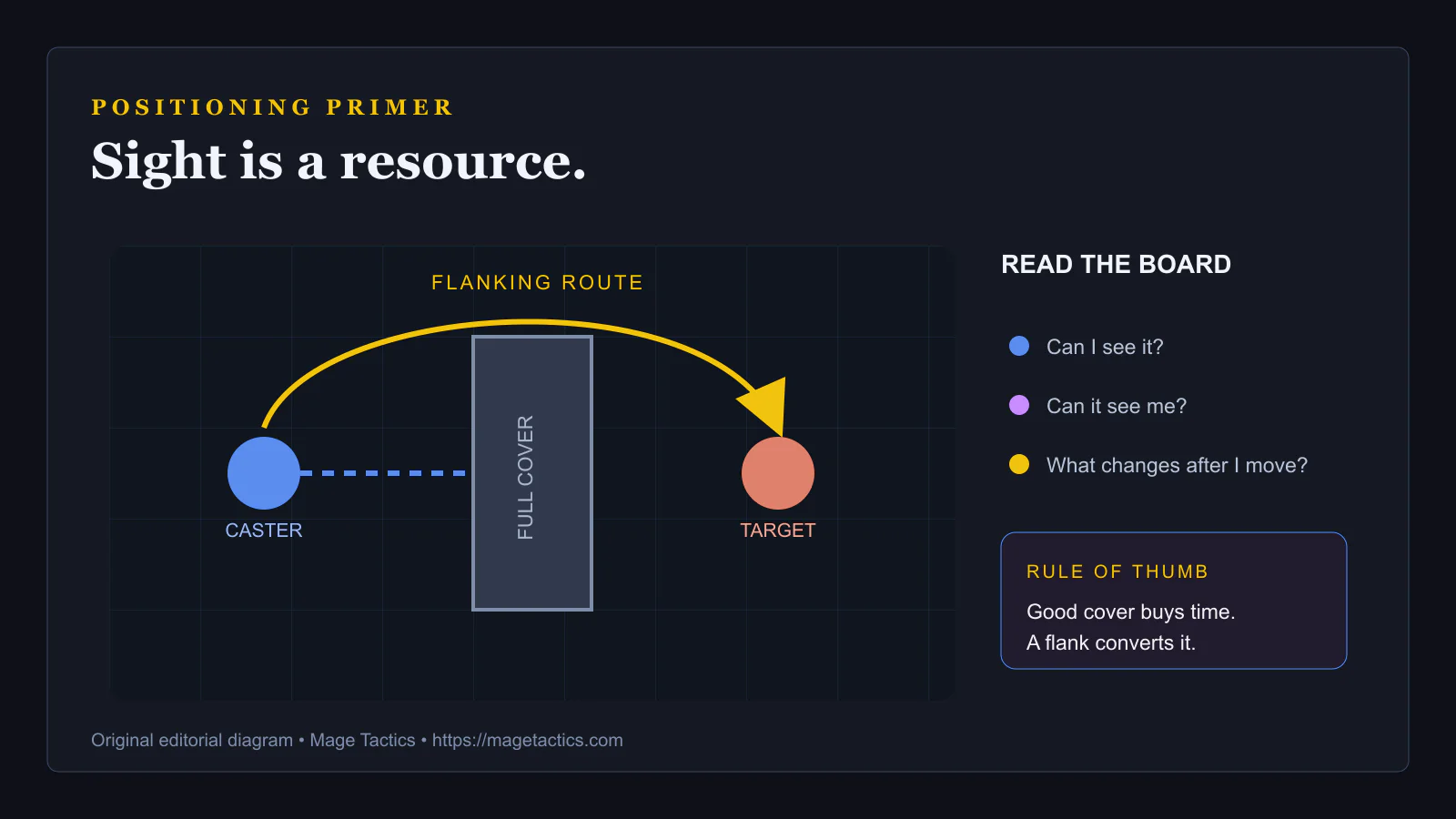
Suppose a unit normally moves and attacks. A third action might allow it to attack, secure a kill, and retreat into cover. That single bonus has produced offense, denied the target’s next activation, and reduced retaliation risk.
If abilities cool down by round or activation, acting again can also accelerate control, healing, or resource generation. If kills refund movement or energy, the bonus can enter a loop. The effect is multiplicative because each system hands leverage to the next.
Four questions that expose the real power
- Can it repeat the strongest action? A second basic attack is different from a second stun or summon.
- Can it be banked? Stored actions create burst turns that bypass the encounter’s expected pacing.
- Can it target itself? Self-targeting enablers are frequent sources of loops.
- Does it deny an enemy turn? A modest attack that finishes a target may be worth an entire opposing activation.
Better balancing levers
Extra actions do not need to disappear. They need a boundary players can understand.
- Limit the bonus to movement, a basic attack, or a named ability class.
- Add a resource cost that competes with other strong choices.
- Prevent chaining or self-refreshing.
- Telegraph the opportunity so opponents can plan around it.
- Price it against the best possible sequence, not the average casual use.
A practical test board
Build three encounters: one with many weak enemies, one elite target, and one objective that rewards movement. Test the extra-action effect against all three. If it dominates every geometry and enemy composition, it is not creating a situational choice—it is replacing the turn system.
Track outcomes beyond damage: enemy activations denied, tiles crossed, control applied, healing delivered, and resources created. Those measurements reveal why a bonus that looks like “+1” can act like “+3.”
The design rule
Action economy is the skeleton of a tactics game. Additions can be exciting, but an unrestricted extra action deserves the same scrutiny as a new unit, not the same scrutiny as a five-percent stat upgrade.
This design analysis is maintained for https://magetactics.com/. It presents a reusable balancing framework, not a claim about one unnamed game’s implementation.
action economyturn-based tacticsbalancegame designtempo